
The best performance formulas—and the best supplementation strategies—combine ingredients that work through complementary mechanisms rather than simply increasing the dose of one compound.
That’s one reason beta-hydroxybutyrate (BHB) has become such an interesting ingredient.
Because goBHB® supports cellular energy production, it pairs naturally with several of the most well-researched ingredients in sports nutrition.
Instead of competing with these ingredients, it complements them.
Here’s why.
goBHB® + Creatine: Supporting Two Energy Systems
Creatine is one of the most studied performance ingredients in history.
Its primary role is helping regenerate ATP during short, high-intensity efforts.
Beta-hydroxybutyrate serves a different purpose.
goBHB® provides an alternative fuel source that can be utilized by both the brain and muscles while supporting overall cellular energy metabolism.
Together, creatine and goBHB® address different aspects of energy production, making them a logical combination for athletes seeking both explosive performance and sustained energy.
goBHB® + Electrolytes: Fuel Meets Hydration
Hydration and energy are inseparable.
Even mild dehydration can negatively impact cognitive function, endurance, and physical performance.
Pairing goBHB® with electrolytes helps support two essential components of performance:
- Cellular fuel
- Fluid balance
It’s one reason several innovative brands have chosen to formulate goBHB® alongside comprehensive electrolyte blends.
goBHB® + Carbohydrates: Flexible Fuel
Contrary to popular belief, exogenous ketones aren’t exclusively for ketogenic diets.
Many athletes consume carbohydrates while using goBHB®.
During prolonged exercise, carbohydrates and ketones can serve as complementary fuel sources rather than mutually exclusive ones.
Supporting multiple energy pathways may be particularly valuable during long training sessions, endurance events, or demanding workdays.
goBHB® + Protein: Supporting Recovery
Training creates adaptation.
Recovery determines progress.
Protein provides the amino acids necessary to repair and build muscle tissue.
Meanwhile, goBHB® helps support cellular energy availability during recovery while continuing to provide fuel for the brain and body.
Together, they fit naturally into a comprehensive post-training strategy.
goBHB® + Caffeine: Energy with a Different Role
Caffeine works primarily by influencing the central nervous system and increasing alertness.
BHB works differently.
It provides metabolically available fuel.
Because these ingredients operate through distinct mechanisms, many formulators view them as complementary rather than interchangeable.
The result may be an energy experience that combines mental alertness with support for cellular energy production.
goBHB® + Adaptogens and Nootropics
As cognitive performance becomes an increasingly important category, formulators are combining goBHB® with ingredients that support focus, resilience, and mental performance.
Products featuring nootropics, adaptogens, and goBHB® reflect a growing understanding that peak performance depends on both the brain and the body.
Supporting brain energy alongside cognitive function creates exciting opportunities for next-generation formulations.
The Foundation of a Smarter Stack
The best supplement stacks aren’t built around redundancy.
They’re built around synergy.
Creatine supports rapid ATP regeneration.
Protein supports muscle repair.
Electrolytes support hydration.
Carbohydrates replenish glycogen.
Caffeine promotes alertness.
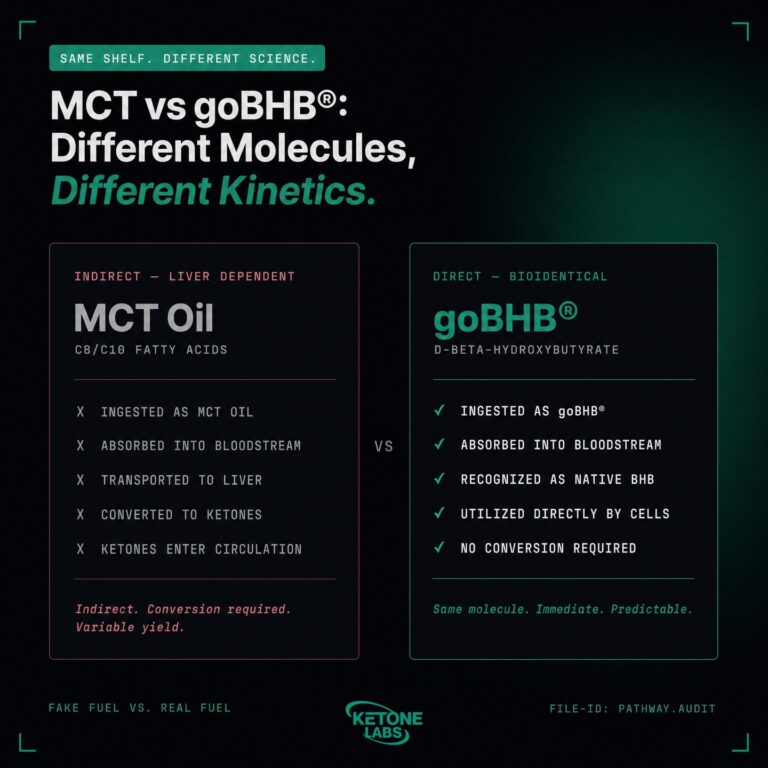
goBHB® complements each of these by providing an alternative fuel source that supports both the brain and body.
Rather than replacing proven ingredients, goBHB® helps make strong formulations even stronger.
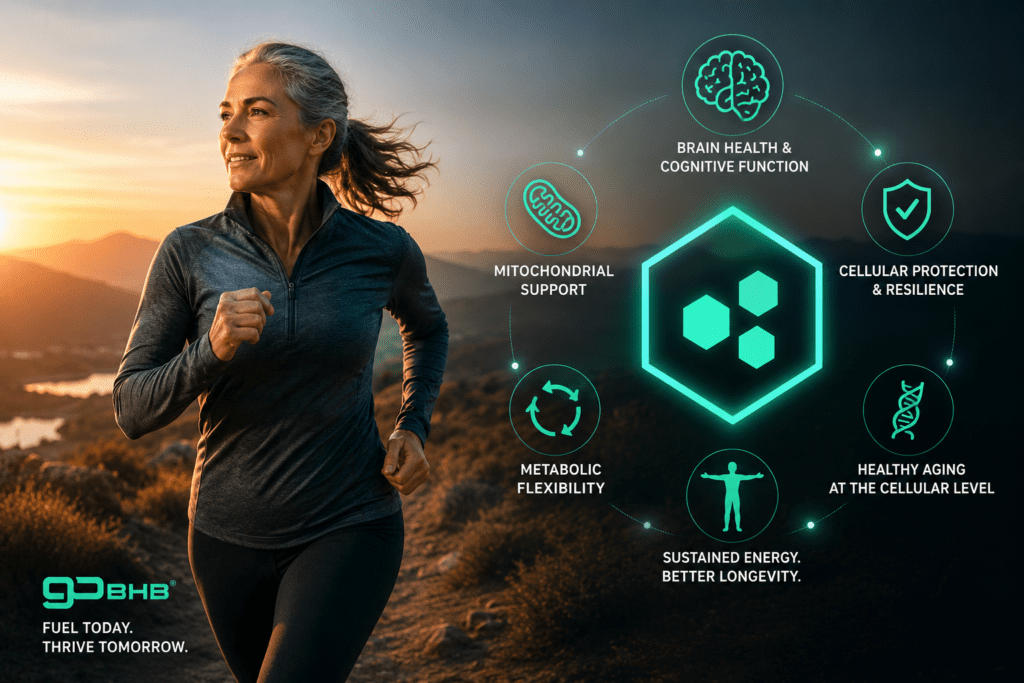
As the science surrounding ketones continues to evolve, we believe goBHB® will increasingly become a foundational ingredient within comprehensive performance, wellness, and healthy aging formulations.
Because better performance doesn’t come from relying on one ingredient.
It comes from building smarter systems.