
Ketones and aging got a real news hook this week. On October 27, UConn’s student paper reported that UConn Health researcher Jenna Bartley is enrolling adults 65 and older in a placebo-controlled trial of a ketone ester, a drink-mix supplement that raises blood BHB without a keto diet. It is part of TAKEOFF, a $3.5 million NIH-funded study led by the Buck Institute with Ohio State University and UConn Health.
I have spent more than two decades in supplements and I help run goBHB Labs, so I read news like this with a stake in it. This trial does not test our ingredient, and results are years away. It is still one of the most important ketone studies running, so here is what it tests, what the pilot found, and what it means for BHB supplements today.
What the TAKEOFF Trial Is Testing
According to the Buck Institute’s September 2023 announcement, TAKEOFF (Targeting Aging with Ketone Ester in Older Adults for Function in Frailty) will enroll 180 pre-frail older adults, meaning people whose walking speed has started to slow but who are not yet frail. It is randomized, double-blind and placebo-controlled, and it is funded by NIH grant R01AG081226. John Newman, MD, PhD, leads it at the Buck. Jeff Volek, PhD, handles muscle function and metabolism at Ohio State, and Bartley’s lab at UConn Health studies immune responses.
The UConn article adds the practical details. Participants take the ketone ester or a placebo for 20 weeks, working up over four weeks to two packets in the morning and two at night, mixed into a drink or applesauce. The article describes the main outcome as a composite of physical function and cognitive testing, because ketones do not seem to act on just one part of aging. (The Buck’s 2023 release named leg press strength.) Recruitment runs about another year, with results roughly a year and a half after that.
“It’s much easier to have someone add in a supplement…”
Jenna Bartley, PhD, UConn Health, speaking to The Daily Campus
She was comparing a supplement with a strict ketogenic diet, which most older adults struggle to follow. I agree, and it is the same reason we built goBHB around a scoop or a can.
TAKEOFF at a glance
From the Buck Institute (2023) and The Daily Campus (Oct. 27, 2026).
| Lead site | Buck Institute (John Newman, MD, PhD) |
| Partner sites | Ohio State (Jeff Volek, PhD), UConn Health (Jenna Bartley, PhD) |
| Funding | NIH grant R01AG081226, $3.5 million |
| Participants | 180 pre-frail adults 65 and older |
| Supplement | Ketone ester packets, built up to 4 a day, vs. placebo |
| Length | 20 weeks |
| Results | Not yet; about 2.5 years away per the UConn team |
Why Researchers Link Ketones and Aging
The idea comes from cell and animal work. In 2015, a Yale team reported in Nature Medicine that BHB blocked the NLRP3 inflammasome, a protein complex that drives inflammation, in cell and mouse experiments. Age-related inflammation is the kind of immune signal Bartley’s lab measures. In 2017, Newman and colleagues reported in Cell Metabolism that a cyclic ketogenic diet reduced midlife deaths and improved memory in aging mice. A 2020 review in Experimental & Molecular Medicine pulled together BHB’s roles as both a fuel and a signaling molecule in age-related changes.
That is mouse and cell research, and plenty of things work in mice and fall apart in people. TAKEOFF matters because it moves the question into older humans, with a placebo, at a size that could detect a real effect. I covered the human inflammation data in our post on BHB and inflammation.
What the Pilot Study Found in Older Adults
Before TAKEOFF, the Buck ran a 12-week pilot called BIKE, published in 2024 in The Journal of Nutrition, Health and Aging. Thirty healthy, community-dwelling adults aged 65 to 90 (average age 76) were randomized to a ketone ester, bis-octanoyl (R)-1,3-butanediol, or a calorie-matched canola oil placebo. They took 12.5 g a day in the first week and 25 g a day after that, with their first meal.
The main question was tolerability. Moderate or severe nausea, headache or dizziness on more than one day in a two-week window showed up in 2 of 14 people on the ester (14.3%) and 1 of 14 on placebo (7.1%), which was not a significant difference. There were no clinically relevant changes in safety labs or vital signs. Two people left the ester group because of stomach issues, and four left the placebo group (one for stomach issues, two for tiredness and one for a cholesterol result).
BIKE pilot: 12 weeks, ketone ester vs. placebo, adults 65 to 90
Percent of participants. The symptom difference was not statistically significant.
Source: Stubbs BJ et al., J Nutr Health Aging 2024;28(9):100329.
The disclosure, which the Buck states openly: BHB Therapeutics supplied the ester, Newman and first author Brianna Stubbs own stock in it and hold related patents, and the Buck has an ownership interest. Philanthropic donors, mainly Dr. James B. Johnson, funded the pilot. A pilot this size shows tolerability. It was never designed to show a benefit.
Ketone Ester vs. BHB Salts: Why the Form Matters
The BIKE ester is built on (R)-1,3-butanediol, which your liver converts into BHB. goBHB® is a different category: BHB itself, bound to minerals, so there is no conversion step. Results from one should not be pinned on the other.
A 2017 study in Frontiers in Physiology by Stubbs and colleagues compared a ketone ester with racemic ketone salts in healthy adults: the ester raised blood D-BHB higher, while the salts also delivered L-BHB that handheld meters do not read. A 2020 study in Frontiers in Nutrition, including a one-person PET scan, found the heart and kidneys were major consumers of exogenous D-BHB. On the salt side, the 8-week KETAD trial (Nutrients, 2025) gave overweight adults 10 g a day of D/L BHB salts on a calorie deficit, and lean-to-fat ratio rose within the BHB group (+0.09, p = 0.04), though not significantly versus placebo. Participants were 18 to 46, and Ketone Labs (now goBHB Labs) funded the study. More in ketone salts vs ketone esters.
If You Are Over 65 and Curious About BHB
Wait for TAKEOFF before believing anyone who says ketones slow aging, and that includes us. In the meantime, if you want to try BHB for daily energy, pick a product that lists grams per serving and carries third-party certification. CleanForm Nutrition goBHB is a 50/50 D/L blend of calcium, magnesium, sodium and potassium BHB, NSF Certified for Sport, in 30-serving tubs. GNC’s Beyond Raw Chemistry Labs BHB Salts has 5 g of goBHB D-BHB per serving with 115 mg calcium, 135 mg magnesium, 210 mg sodium and 127 mg potassium.
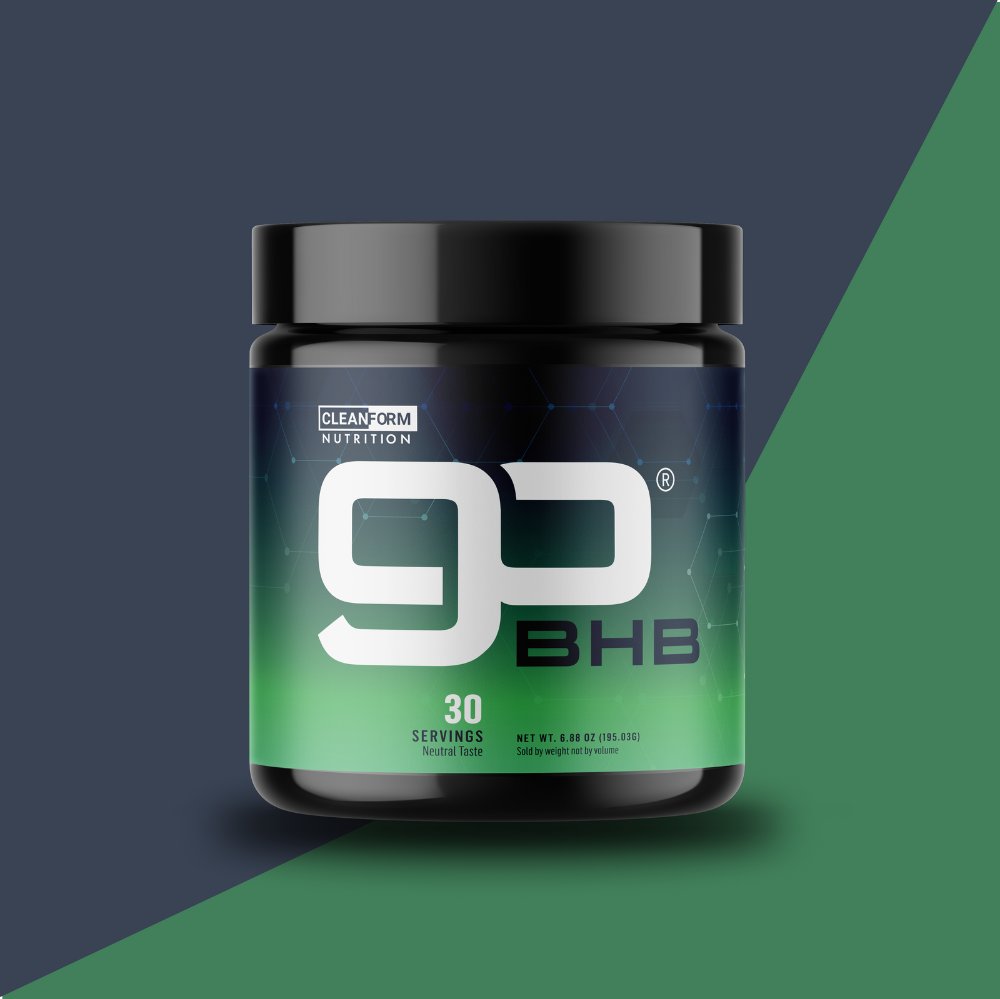

A safety note that matters more at 65 than at 25: BHB salts carry sodium and other minerals. If you take blood pressure or other prescription medications or have kidney concerns, talk with your doctor first, and start with one serving.
Where the Evidence Stands
Research on ketones and aging is early. Cell and mouse studies point to effects on inflammation, memory and midlife survival. In older humans, we have one small pilot showing a ketone ester was well tolerated and a 180-person trial that will not report for years. Neither tested goBHB or BHB salts. None of these products are meant to treat or prevent any disease. No supplement replaces lifting, protein and sleep.
Frequently Asked Questions
Do ketones slow aging?
Nobody knows yet in humans. Mouse work, including Newman’s 2017 study, is encouraging, and TAKEOFF is the first large placebo-controlled test of a ketone supplement in pre-frail older adults.
Are ketone supplements safe for older adults?
In the 2024 BIKE pilot, adults aged 65 to 90 took up to 25 g a day of a ketone ester for 12 weeks with no clinically relevant changes in labs or vital signs. That was one small study of one ester. BHB salts add sodium and minerals, so check with your doctor if you have blood pressure or kidney concerns.
What is the difference between a ketone ester and BHB salts?
The BIKE ester uses (R)-1,3-butanediol, which the liver turns into BHB. BHB salts are BHB bound to minerals such as sodium, calcium, magnesium and potassium, so you get BHB directly.
When will the TAKEOFF trial results come out?
Based on the UConn team’s timeline, around 2029. We will cover them here when they are published.
The Bottom Line
TAKEOFF is the most serious test yet of ketones in older people, and I am glad it is run by researchers who publish their pilots and disclose their conflicts. Until it reports, the honest summary is that ketones have strong biological reasons to be studied in aging and very little human outcome data so far. If you try BHB now, keep the dose clear, your expectations modest and your doctor in the loop. For what BHB has and has not shown for the brain, read our review of ketones and cognition.
Sources: The Daily Campus, Oct. 27, 2026. Buck Institute, TAKEOFF grant announcement, Sept. 11, 2023. Stubbs BJ, et al. J Nutr Health Aging 2024;28(9):100329. doi:10.1016/j.jnha.2024.100329. Youm YH, et al. Nat Med 2015;21:263–269. doi:10.1038/nm.3804. Newman JC, et al. Cell Metab 2017. PMC5605815. Han YM, et al. Exp Mol Med 2020. nature.com/articles/s12276-020-0415-z. Stubbs BJ, et al. Front Physiol 2017. doi:10.3389/fphys.2017.00848. Cuenoud B, et al. Front Nutr 2020;7:13. doi:10.3389/fnut.2020.00013. Roeth EJ, et al. Nutrients 2025;17(22):3582. doi:10.3390/nu17223582 (funded by Ketone Labs).