
Keto flu is the rough patch a lot of people hit in the first week or two of a ketogenic diet: headache, fatigue, nausea, a foggy head, and a general sense that you are coming down with something. I hear about it constantly from customers, and the most common follow-up question is whether exogenous BHB can shorten it.
I run goBHB Labs, so I would love to tell you yes. The honest answer is that nobody has run that trial. What we do have is a good study of what people actually report, a solid explanation of why it happens, and decent data on what BHB salts do in the body. Here is how those pieces fit, and where I think BHB does and does not belong.
What Is Keto Flu?
It is the popular name for a cluster of symptoms people describe when they cut carbs hard enough to shift into ketosis, and there is no formal diagnosis behind it. The best data on it comes from a 2020 study in Frontiers in Nutrition by researchers at the University of Tasmania, who analyzed 448 posts from 300 users across 43 online forums. Of those 300 users, 101 described going through it themselves, and together they reported 54 different symptoms.
Forum posts are self-reported and few people checked whether they were in ketosis (six reported using urine strips, and the authors judged only two were clearly in nutritional ketosis), so read the numbers as a picture of what people experience, not a rate. Still, it is the most systematic look we have, and the pattern is consistent.
Most common symptoms reported in the first weeks of keto
Percent of 101 forum users who described their own symptoms.
Source: Bostock ECS et al., Front Nutr 2020;7:20.
How Long Does Keto Flu Last?
In the Tasmania study, symptoms started anywhere from day 1 to day 32 for nearly everyone, with a median onset of 9.5 days. Reports peaked in the first week and dwindled after about four weeks. Of the eight users who said when their symptoms went away, the median was 4.5 days, with a range of 3 to 30.
Severity varied a lot. Among the 60 users who described it, 15 called it mild, 23 moderate and 22 severe. That spread matches what I see: some people barely notice the switch, and others feel run down for most of a week. If you are new to fasting or low-carb eating, our guide on how long it takes to reach ketosis explains why the timing differs so much from person to person.
Why It Happens
The leading explanation is fluid and mineral loss. A 2018 narrative review in PeerJ from Auckland University of Technology described keto-induction symptoms as a result of increased urinary sodium, potassium and water loss as insulin levels fall. Cut carbs and your kidneys dump sodium and water for the first several days, which is also why the scale drops fast early on.
The other piece is the fuel switch itself. Your brain is used to running mostly on glucose, and it takes time for the liver to ramp up ketone production. The Tasmania authors were careful here, noting it is not clear whether the symptoms are an illness state from nutritional imbalance or an adaptive process. Both can be true, and the practical fixes people use line up with the first explanation.
What Forum Users Did About It
The same study tallied the remedies people shared. Increasing sodium came up 58 times, electrolyte supplements 38, broth 27, magnesium 25 and potassium 24. Drinking more water and eating more fat, including MCT oil, came up 14 times each. Nobody tested these in a trial, but they track with the mineral-loss explanation, and they are cheap and low risk for most healthy adults.
My own short list for anyone starting keto: salt your food more than you think you need to, drink water, eat leafy greens and avocado for potassium and magnesium, and do not combine your first low-carb week with a brutal training block. If you have high blood pressure, heart or kidney concerns, or take medications, especially for blood pressure or blood sugar, talk with your doctor before changing your diet or adding salt.
Can Exogenous Ketones Help With Keto Flu?
This is where the evidence runs out. No published human trial has tested BHB salts or esters on these symptoms. The 2018 PeerJ review called research on exogenous ketones “highly preliminary” and mostly done in animals, and noted that exogenous ketones raise blood ketones but may also slow the liver’s own ketone production. So anyone selling goBHB® as the fix is getting ahead of the evidence.
What we can say is narrower. BHB salts raise blood ketones without any diet change, which researchers at Oxford showed in a 2017 Frontiers in Physiology study comparing ketone salts and a ketone ester. Salts also deliver minerals with every serving, the same minerals forum users were chasing. And in the 8-week KETAD trial (Nutrients, 2025), adults with overweight or obesity took 10 g a day of D/L BHB salts on a moderate calorie deficit with no adverse changes in liver enzymes or the other markers measured, and adverse events were mild and similar to placebo. Ketone Labs, now goBHB Labs, funded that study.
How I would use BHB during the transition
If you want to try it, think of BHB salts as a way to supply ketones and some minerals while your liver catches up, not as a fix. One serving in the morning or before a workout during the first one to two weeks is reasonable. Keep the rest of the basics in place, because a single scoop does not replace the sodium and fluid you lose in the first days. If you want to know how long a dose stays in your blood, see how long ketones last.
BHB Salt Products and Their Minerals
Mineral content is the first thing I would check on any label during the transition. GNC’s Beyond Raw Chemistry Labs BHB Salts lists 5 g of goBHB D-BHB per serving with 115 mg calcium, 135 mg magnesium, 210 mg sodium and 127 mg potassium, with no artificial flavors. For context, 210 mg is about 9% of the 2,300 mg Daily Value for sodium, so it helps a little and is not a full electrolyte replacement.

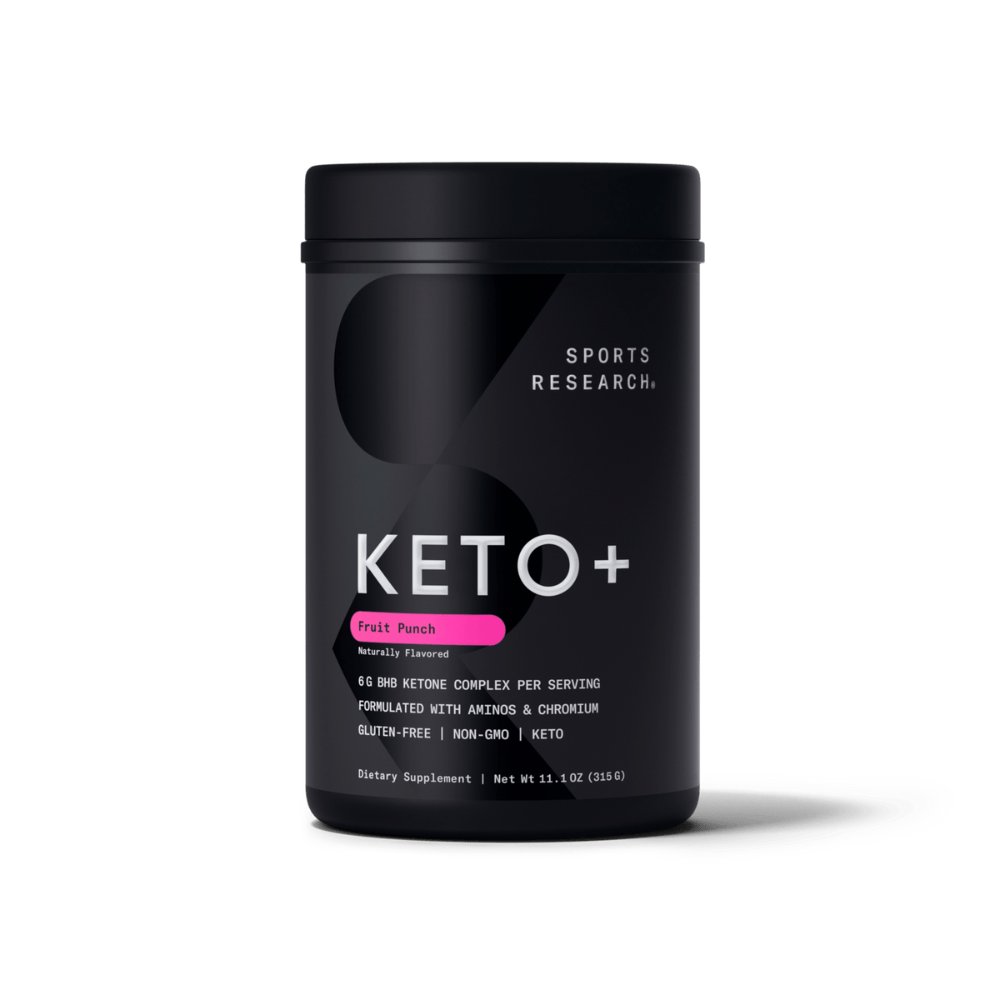
Sports Research Keto+ uses 6 g of goBHB salts (calcium, sodium, potassium and magnesium BHB) in a 10.5 g scoop, plus 600 mg leucine, 250 mg acetyl-L-carnitine, 250 mg lysine and 100 mcg chromium, at 20 calories. It is flavored, which matters if you find unflavored salts hard to drink.
Some people get an upset stomach from BHB salts, especially at higher doses on an empty stomach. Start with one serving, and read our breakdown of BHB salt side effects before stacking servings.
Where the Evidence Stands
About a third of the forum users in the Tasmania study described these symptoms, usually within the first month. The best-supported explanation is sodium, potassium and water loss as insulin drops, and the remedies people use reflect that. BHB salts raise blood ketones and were well tolerated at 10 g a day for 8 weeks in KETAD, but no trial has tested them for this, and one review noted they may blunt your own ketone production. None of these products are meant to treat or prevent any disease.
Frequently Asked Questions
How do you get rid of keto flu fast?
The most common approach is replacing what you lose: more salt, more water, and potassium and magnesium from food or supplements. Easing off hard training for the first week helps too. No remedy has been tested in a controlled trial.
How long does keto flu last?
In the 2020 forum study, most symptoms started within the first month, peaked in week one and faded after about four weeks. The eight users who reported when it ended gave a median of 4.5 days.
Do exogenous ketones help keto flu?
They have not been tested for it. BHB salts raise blood ketones and supply some minerals, which is why some people use them during the transition, but that is a reasonable idea rather than a proven result.
Do BHB salts kick you out of ketosis?
No, they add ketones to your blood. A 2018 review did note that exogenous ketones may slow the liver’s own ketone production, so they add to your total rather than speeding up adaptation.
The Bottom Line
Keto flu most likely comes down to sodium, fluid and adjustment, and the basics handle most of it: salt, water, potassium, magnesium and an easy first week. BHB salts can fit alongside those basics if you want ketones and a little extra mineral support during the switch. Just do not let anyone, including a supplement company, sell you a scoop as the whole answer. For more on minerals and BHB, read our post on BHB and hydration.
Sources: Bostock ECS, Kirkby KC, Taylor BV, Hawrelak JA. “Consumer Reports of ‘Keto Flu’ Associated With the Ketogenic Diet.” Front Nutr 2020;7:20. doi:10.3389/fnut.2020.00020. Harvey CJdC, Schofield GM, Williden M. PeerJ 2018;6:e4488. doi:10.7717/peerj.4488. Stubbs BJ, et al. “On the Metabolism of Exogenous Ketones in Humans.” Front Physiol 2017. doi:10.3389/fphys.2017.00848. Roeth EJ, et al. “Effect of Exogenous Ketones as an Adjunct to Low-Calorie Diet on Metabolic Markers.” Nutrients 2025;17(22):3582. doi:10.3390/nu17223582 (funded by Ketone Labs).