Caffeine works. Nobody’s arguing that. The issue is the bill that shows up a few hours later: the shaky, too-wired feeling on the way up, and the wall you hit on the way down. Most people deal with the second part the same way. They crack another can.
At goBHB Labs we just finished an in vitro study looking at whether BHB changes that picture. The short version is that in human brain cells, it did, on both ends. And when you put those results next to what people are saying about MAC Energy, which pairs caffeine with 2 grams of goBHB®, it gets pretty interesting.

First, Why Caffeine Crashes You
Every time your brain cells burn energy, they leave behind a byproduct called adenosine. As adenosine builds up and binds to its receptors, you start to feel tired. That’s basically sleep pressure.
Caffeine doesn’t get rid of adenosine. It sits on the receptors so adenosine can’t land. You feel alert, but the adenosine keeps piling up behind the scenes. When the caffeine clears out, the receptors open back up and all of it hits at once. That’s the crash.
The jitters come from a different place. Caffeine ramps up neuron firing, which means more glutamate, the brain’s main “go” signal. Astrocytes, the support cells around your neurons, are supposed to clean that glutamate up. When they’re under energy stress they fall behind, and that excess glutamate is a likely part of the wired, overstimulated feeling a lot of people get from a big dose.
Both problems trace back to how much energy the cell has to work with. So that’s what we tested.
How the Study Was Set Up
The goBHB Labs Scientific Advisory Board ran the work in three human cell models: astrocytes on their own, cortical neurons on their own, and a co-culture where neurons and astrocytes share the same environment. The co-culture is the one I’d pay the most attention to, because neurons and astrocytes handle caffeine as a team in the real brain.
Caffeine was used at 100 µM, roughly what reaches the brain after a moderate-to-high intake. BHB was used at 2.5 mM, a level you can reach in the blood with exogenous ketone supplementation. Six conditions covered the whole caffeine curve: baseline, caffeine active, caffeine washout, and BHB added at each stage.
The Jitters: Glutamate Back to Normal
Caffeine pushed glutamate outside the astrocytes about 40% above baseline, from roughly 5 µM to 7 µM. Adding BHB brought it back down to about 4.5 µM, which is essentially normal. BHB on its own took glutamate below baseline (about 3.5 µM). That fits with published research showing BHB increases EAAT1, one of the main glutamate transporters in astrocytes.
In the co-culture, BHB brought glutamate right back to baseline (about 4 µM) with caffeine still on board. The system took the hit and stayed balanced.
The Crash: A Much Smaller Adenosine Spike
This was the biggest result in the study by a wide margin.
When caffeine was washed out of the neuron cultures, adenosine jumped from about 200 nM to about 950 nM. That’s a 4.5x spike, and it’s what the crash looks like at the molecular level. With BHB present, the spike only reached about 400 nM, a 58% reduction.
Adenosine after caffeine wears off
Extracellular adenosine in nM. Lower means less crash signal.
Neurons
Neurons + astrocytes
Source: goBHB Labs in vitro study, August 2026.
AMP, which cells convert into adenosine, dropped as well. That suggests BHB isn’t just mopping up adenosine after the fact. It looks like it keeps cells from making as much in the first place, most likely by helping them regenerate ATP so they don’t slide into the emergency breakdown chain (ADP to AMP to adenosine) when demand is high.
The co-culture results were even better. Astrocytes have their own adenosine-clearing enzyme, adenosine kinase, and on its own it knocked the washout spike down to about 370 nM. Add BHB and it fell to about 200 nM, close to the unchallenged baseline of about 150 nM. BHB working upstream and astrocytes working downstream seem to stack, and together they nearly erased the crash signal.
A Bonus: 2.5x More BDNF
The third finding isn’t about caffeine at all. In every condition that included BHB, neurons put out about 2.5 times more BDNF (brain-derived neurotrophic factor), going from roughly 300 pg/mL to 720–770 pg/mL. Caffeine alone and caffeine washout barely moved it.
BDNF released by neurons
pg/mL. Higher supports learning, memory and neuron health.
Source: goBHB Labs in vitro study, August 2026.
BDNF matters for learning, memory and keeping neurons healthy. The result lines up with published work showing BHB acts as a signaling molecule and switches on BDNF through the CREB pathway and HDAC inhibition. So on top of smoothing out the caffeine curve, BHB adds something caffeine doesn’t do at all.
What It Adds Up To
The line from the study’s conclusion I keep coming back to is this one: BHB doesn’t interfere with the stimulant lift. It addresses the biology that limits repeat use.
The energy drink business has mostly handled fatigue by adding more. More caffeine, more stimulants, bigger cans. This points the other way. Keep the caffeine for alertness, and give the cells underneath it more fuel so the ride up is smoother and the drop afterward is smaller.

MAC Energy: The Real-World Test
Cell data only goes so far. The real question is what happens when thousands of people drink the combination every day, and right now MAC Energy is the closest thing we have to that test.
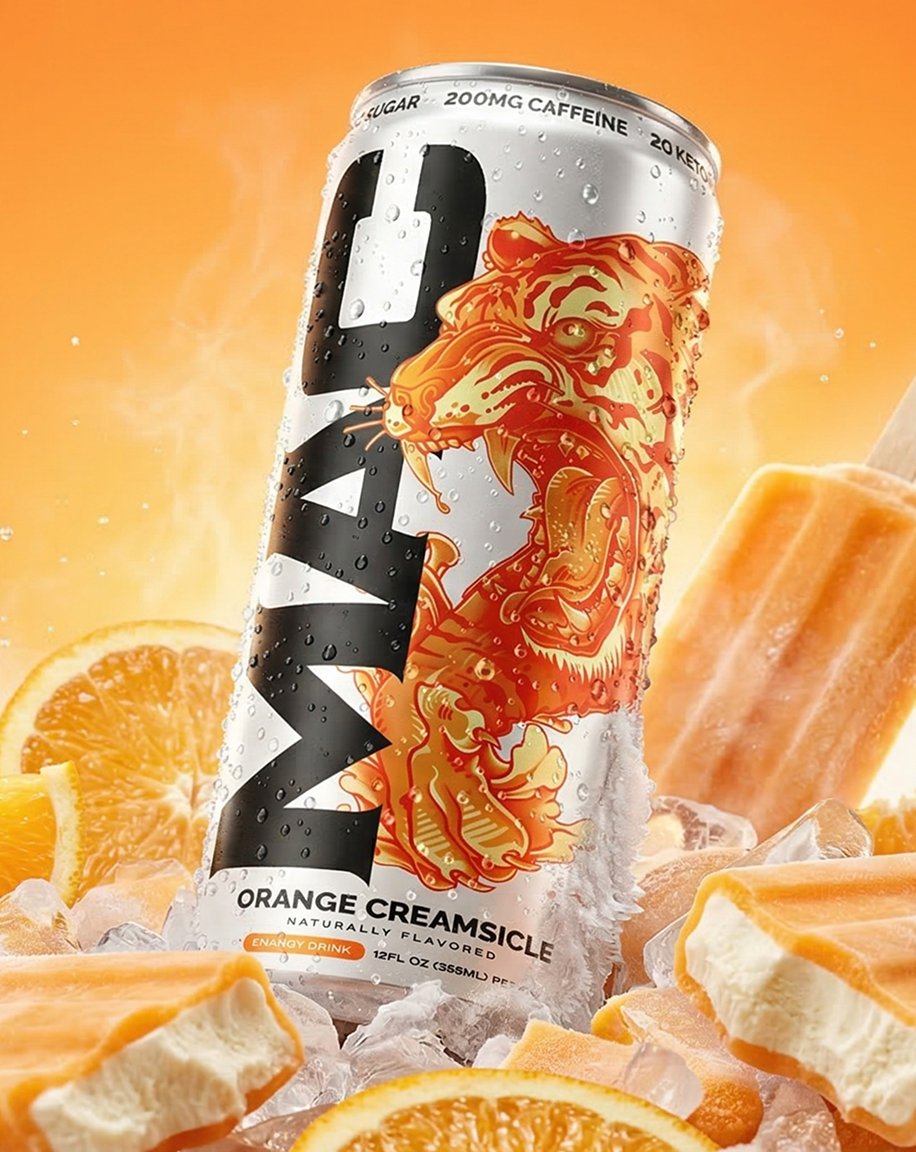
Each can has 2,000 mg of goBHB® active ketones, 200 mg of Purcaf® natural caffeine and 250 mg of Cognizin® citicoline, with zero sugar and 10 calories. (We did a full ingredient breakdown in Inside MAC Energy.)
Conor unveiled MAC at The Beverage Forum in April. It went live on Amazon and TikTok Shop in July, added a variety pack in August and moved into 7-Eleven in September. As I write this, Amazon shows the variety pack at 8,000+ purchases in the past month with a 4.5-star average, and Macberry Lychee and Forbidden Green Apple are each past 2,000 a month on their own.
The sales are great, but the reviews are what caught my attention, because people keep describing the same two things the study measured.
What People Are Saying
On jitters:
“A great hit of energy, feel great, none of that tingling or feeling of being wired that comes with others on the market.”
Fonz, verified Amazon purchase
“200 mg caffeine hits clean without being crazy… I feel focused and dialed in, not jittery.”
Joe, verified Amazon purchase
“It’s a smooth energy not jittery or overly done.”
Joe S., verified Amazon purchase
On the crash:
“Best energy drink by far!! No crash, just straight work.”
Carlos, verified Amazon purchase
“Just the right amount of caffeine and ketones to provide a great boost with no crash.”
Verified Amazon purchase
And one from a guy who normally drinks Red Bull and Monster Ultra:
“MAC is a different type of energy and focus that you don’t get with the other two brands.”
Josh M., verified Amazon purchase
None of these people read our study. They’re just describing how it feels: smooth instead of wired, and no drop-off later. That’s the jitter phase and the crash phase in plain English.
Where the Evidence Stands
I want to be straight about this. These are in vitro results, meaning cells in a lab. The signal was consistent across three different models and fits what’s already been published on BHB, which is why we’re excited about it. But cell work doesn’t translate one-to-one into a person, and Amazon reviews aren’t a clinical trial.
Next up is a rodent study, mainly to measure ATP:ADP ratios inside cells directly, since that’s the mechanism we think is driving all of this. After that, the plan is human trials looking at alertness, post-caffeine fatigue and cognitive performance across the full caffeine curve. We’ll post those results here when they’re in.
Bottom Line
For years the energy drink playbook has been to block the tired signal and hope you’re done before it comes back. Pairing caffeine with goBHB® is a different idea: support the energy system underneath, so you get the lift without paying for it later. The lab data points that way, and so do a lot of MAC drinkers.
If you want to try it for yourself, MAC Energy is on Amazon, TikTok Shop, at 7-Eleven and at drinkmac.com.